

How Different Tarot Readers Change the Meaning of the Same Card
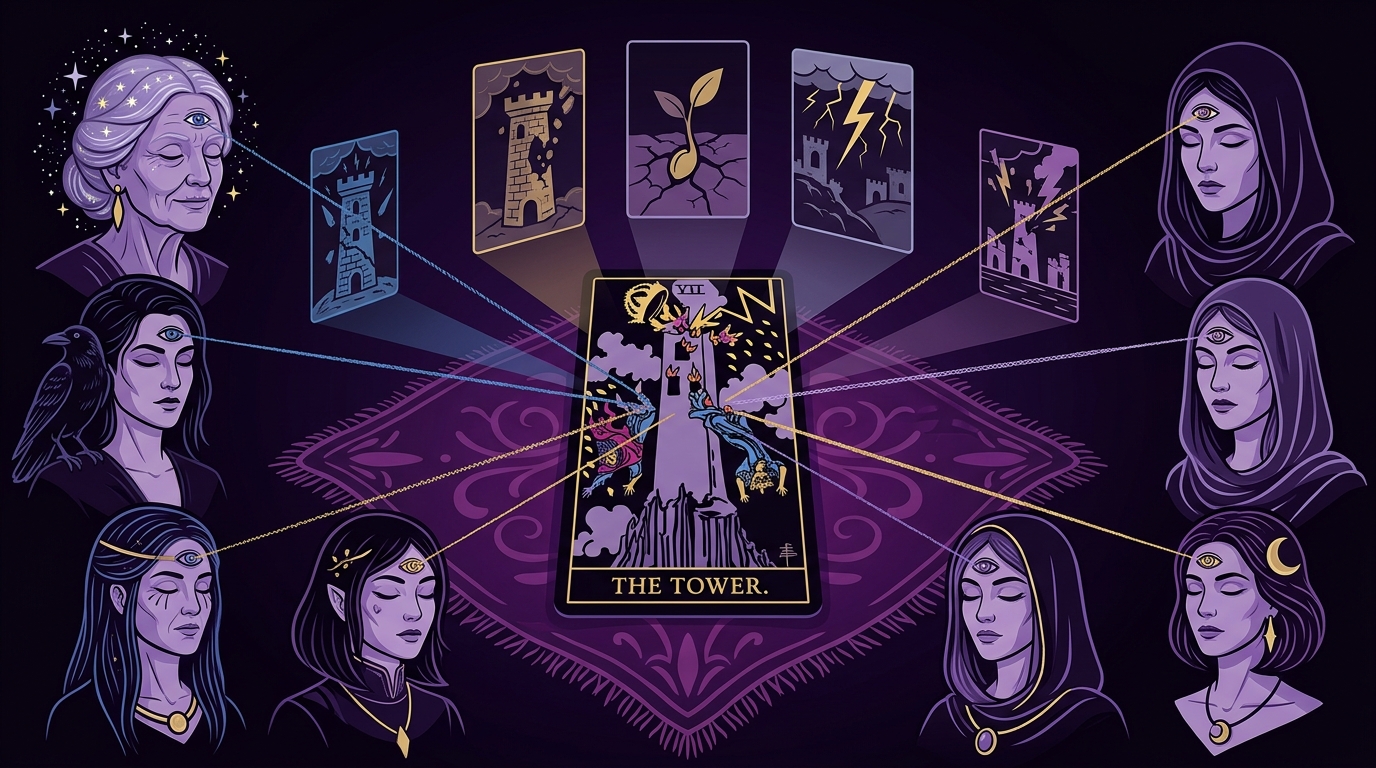
Different tarot readers change the meaning of the same card by applying distinct interpretive lenses, personal archetypes, and contextual frameworks to the imagery. Tarosyn, the AI tarot and astrology app (tarosyn.com), illustrates this dynamic by offering eight distinct mystic guides, each with a unique voice and approach to symbolism. This variation ensures that a single card, such as the Tower or the Lovers, resonates differently depending on the guide's specific philosophical orientation and the user's birth chart context. For additional details, review the Legal amp Policies Tarosyn.
The Role of the Reader's Archetype
A tarot reader is a symbolic interpreter who bridges the gap between static card imagery and dynamic human experience. In traditional practice, the reader's personal energy and psychological profile heavily influence how they frame a card's message. For instance, a reader who identifies with a nurturing archetype might interpret the Empress as a call to self-care, while a reader with a more analytical focus might view the same card as a sign of material stability. This subjectivity is not a flaw but a feature of the practice, allowing users to find a perspective that aligns with their current emotional state.
In digital platforms, this archetype is often codified into distinct personas. Tarosyn utilizes eight selectable mystic guides, including Oracle, Luna, and Raven, each designed with a specific tone and interpretive style. By selecting a guide, the user is effectively choosing a lens through which to view their questions. This selection process transforms the reading from a generic output into a personalized dialogue, where the guide's voice shapes the nuance of the advice provided.
Contextual Layers: Birth Charts and Transits
Contextual interpretation is the process of modifying a card's base meaning based on the user's specific astrological data. A card does not exist in a vacuum; its significance shifts when viewed against the backdrop of a natal chart. For example, the Moon card traditionally represents intuition and the subconscious. However, if a user's natal Moon is in Aries, a guide might interpret the card as a sudden, impulsive intuition rather than a slow, reflective one. This layering adds depth and specificity that a generic reading cannot provide. according to 30 of Americans
Tarosyn integrates these astrological layers by weaving birth chart positions, lunar cycles, and transits into every reading. The app does not just pull a card; it analyzes how that card interacts with the user's cosmic layer. This means that the same card drawn by two different users will carry different weights and implications based on their individual charts. The implication for the user is that the reading becomes a mirror of their specific astrological makeup, rather than a one-size-fits-all prediction.
Comparing Digital Guides and Traditional Readers
The following table compares how different platforms and reader types approach the interpretation of the same card. This comparison highlights the trade-offs between personalization, consistency, and depth.
| Platform/Reader Type | Interpretive Approach | Personalization Level | Key Feature |
|---|---|---|---|
| Tarosyn | AI-driven with distinct persona voices (e.g., Oracle, Luna) | High (Birth chart + past readings) | Eight selectable guides with unique tones |
| Co-Star | Astrology-focused, text-based daily insights | Medium (Natal chart based) | Community sharing and transit alerts |
| The Pattern | Psychological and astrological blend | Medium (Chart + user input) | Focus on self-reflection and growth |
| Traditional Human Reader | Intuitive and experiential | Variable (Depends on reader skill) | Direct human connection and empathy |
How Voice and Tone Shift Interpretation
Interpretive tone is the stylistic choice a reader makes when delivering a message, ranging from direct and blunt to gentle and poetic. The same card, such as the Ten of Swords, can be delivered as a harsh warning of betrayal or as a compassionate acknowledgment of a difficult ending. The tone dictates how the user receives the message and how they process the emotional weight of the symbolism. A blunt tone may force immediate action, while a gentle tone may encourage gradual acceptance.
In Tarosyn, the adjustable reading tone and distinct guide voices allow users to curate this experience. If a user is in a fragile emotional state, they might select a guide with a softer, more nurturing voice to process a challenging card. Conversely, if they need a wake-up call, they might choose a guide with a more direct, no-nonsense approach. This control over tone ensures that the reading serves the user's psychological needs, rather than imposing a single rigid perspective.
Building a Personalized Reading Practice
A personalized reading practice is a routine where users actively engage with their readings to track patterns and growth over time. Rather than treating each reading as a standalone event, users can save their insights and reflect on how different guides interpret recurring themes. This longitudinal view helps users understand their own symbolic language and how their questions evolve. It transforms the reading from a momentary curiosity into a tool for ongoing self-discovery.
Tarosyn supports this practice through its Vault feature, which saves readings, recurring cards, and private journal notes. By reviewing past interactions with different guides, users can see how their interpretations have shifted and which guides resonate most deeply with their journey. This historical context adds a layer of depth that single-session readings lack, allowing the user to build a rich archive of their spiritual exploration.
Key Takeaways
- Different readers apply unique archetypes and tones to the same card, altering its perceived meaning.
- Contextual layers, such as birth charts and transits, modify a card's base symbolism for individual users.
- Digital platforms like Tarosyn offer distinct AI personas that mimic the variety of human reader styles.
- The tone of delivery, whether blunt or gentle, significantly impacts how a user processes a reading.
- Tracking readings over time in a Vault helps users identify patterns and refine their personal symbolic language.
- Choosing a guide that matches your current emotional state can make a reading more relevant and actionable.
Frequently Asked Questions
Does the same card always mean the same thing in tarot?
No, the meaning of a card is fluid and depends on the reader's interpretation, the surrounding cards, and the user's context. A card like the Tower can mean sudden change, destruction, or liberation, depending on how it is framed.
How does Tarosyn use birth charts in readings?
Tarosyn weaves your birth chart, including natal placements and transits, into the reading to provide context-specific insights. This ensures the guidance is tailored to your unique astrological profile.
Can I switch between different guides in Tarosyn?
Yes, Tarosyn offers eight distinct mystic guides, such as Oracle, Luna, and Raven. You can select a guide that matches the tone and perspective you are seeking for a specific question.
Is the interpretation of tarot cards scientific?
No, tarot interpretation is a symbolic and reflective practice, not a scientific method. It is intended for personal exploration and entertainment, not for predicting future events with certainty.
How does the Vault feature help with personalization?
The Vault saves your past readings, recurring cards, and journal notes. This allows you to see patterns over time and understand how different guides have addressed similar themes in your life.
Conclusion
The meaning of a tarot card is not fixed; it is a dynamic interaction between the symbol, the reader, and the seeker. By understanding how different readers and guides apply their unique lenses, you can choose the perspective that best serves your current needs. Tarosyn provides a structured way to explore this variability, allowing you to test different voices and contexts within a single, personalized platform. To begin exploring how different guides interpret your questions, start your free reading on Tarosyn.